
Table of Contents
- What Is the Skin Barrier and Why Does It Matter?
- Signs of a Damaged Skin Barrier to Watch For
- Plant-Based Oils for Skin Barrier Repair
- Natural Ingredients That Rebuild a Damaged Skin Barrier
- Benefits of Natural Soap for Sensitive Skin
- How to Build a Gentle Routine: Step-by-Step Barrier Repair
- Diet, Environment and Lifestyle Habits That Support Skin Repair
- Frequently Asked Questions
Last Updated: September 2, 2026
What Is the Skin Barrier and Why Does It Matter?
The skin barrier, technically known as the stratum corneum, is the outermost layer of the epidermis. Its job is to lock moisture in and keep environmental aggressors out. This thin, invisible lipid bilayer is composed of fatty acids, ceramides, and cholesterol arranged between skin cells like mortar between bricks. When intact, the skin holds moisture efficiently, resists irritants, and regulates its own pH balance. When it breaks down, the consequences ripple through every layer beneath it.
Transepidermal water loss, or TEWL, is a measure used to gauge barrier function. High TEWL means water escapes faster than it should, leading to dehydration, sensitivity, and inflammation. According to the Australasian College of Dermatologists, barrier dysfunction is a primary driver of conditions like eczema, rosacea, and chronic skin sensitivity.
The skin microbiome also plays an overlooked role. Beneficial bacteria on the skin's surface support barrier function and regulate local immunity. Disrupting the microbiome through harsh cleansers or overuse of active ingredients accelerates barrier breakdown.
Signs of a Damaged Skin Barrier to Watch For
Recognising the signs of a damaged skin barrier early is the difference between quick recovery and months of reactive skin management.
Redness, Tightness and Increased Sensitivity
The most common early indicator is persistent tightness after cleansing. Skin that once tolerated products without issue begins reacting to things it never did before. Redness appears in patches, often on the cheeks, around the nose, or across the forehead. Products that used to feel comfortable now sting or burn.
Increased sensitivity is the skin's distress signal. When the lipid bilayer is compromised, nerve endings sit closer to the surface and respond intensely to temperature changes, fragrance, and water. Many people mistake this reactivity for an allergy when the barrier has simply lost its buffering capacity.
Other signs include rough or flaky texture, dullness, breakouts in atypical areas, unexplained itching, and dryness immediately after washing. Healthdirect Australia's skin health guidance notes that persistent skin irritation and dryness warrant attention, particularly when lifestyle factors are otherwise stable.
What Destroys the Skin Barrier in the First Place?
Over-cleansing with foaming or sulphate-based cleansers strips the skin's natural fatty acids. Overuse of active ingredients, particularly exfoliating acids and retinoids, disrupts the skin repair cycle. Hot showers, low humidity, and prolonged sun exposure all accelerate TEWL. Stress and poor sleep impair barrier function, the skin repairs itself predominantly overnight, so chronic sleep disruption directly slows the barrier's ability to rebuild.
The irony is that many people damage their barrier while trying to improve their skin. Aggressive routines, too many active ingredients, and frequent product switching are the most common mistakes.
Plant-Based Oils for Skin Barrier Repair
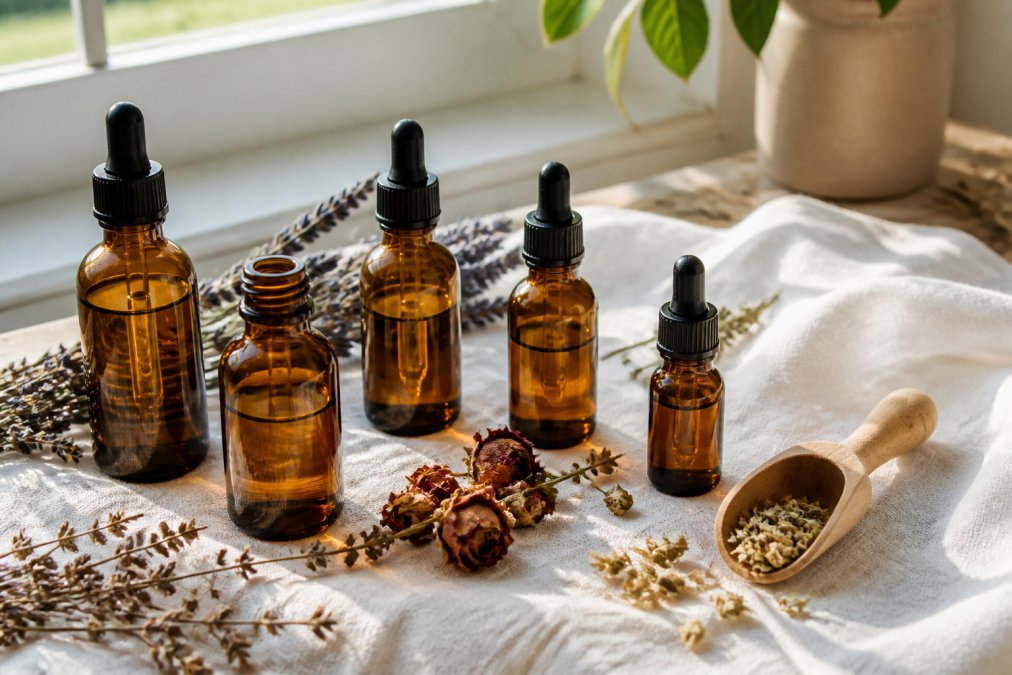
Plant-derived oils are among the most effective topical tools for barrier repair because they closely mimic the skin's own lipid composition. Unlike synthetic occlusives that simply sit on the surface, botanical oils integrate into the lipid bilayer and support its structural integrity.
Sunflower Seed Oil, Safflower Oil and Linoleic Acid
Sunflower seed oil and safflower oil are well-researched for barrier repair largely because of their high linoleic acid content. Linoleic acid is an essential fatty acid the skin cannot synthesise on its own and is a critical building block of the ceramides that hold the lipid bilayer together. Barrier-compromised skin is frequently linoleic acid-deficient. Topical application of linoleic-acid-rich oils helps replenish this deficit directly. Research published through the National Institutes of Health's PubMed database consistently points to linoleic acid's anti-inflammatory and barrier-supportive properties.
Both oils are lightweight, absorb readily, and are well-tolerated by sensitive skin types. They work as emollients, softening the skin's surface while supporting the lipid structure beneath.
Squalane, Jojoba and Sesame Oil for Deep Moisture
Squalane, derived from plant sources such as sugarcane and olive, is structurally similar to the skin's own sebum, making it exceptionally compatible with most skin types, including oily and acne-prone skin. As an emollient and occlusive, it reduces TEWL without clogging pores and has a long shelf life, making it practical for natural formulations.
Jojoba oil is technically a liquid wax rather than a true oil, which makes it effective. Its molecular structure closely resembles human sebum, allowing it to balance oil production while delivering deep moisture. It is non-comedogenic and anti-inflammatory, making it ideal for reactive skin.
Sesame oil is rich in antioxidants and fatty acids, supporting barrier function while offering mild UV-filtering properties. It is heavier than jojoba or squalane, making it better suited to nighttime application or very dry skin types.
Oil |
Key Fatty Acid |
Skin Type Best For |
Primary Benefit |
|---|---|---|---|
Sunflower Seed |
Linoleic acid |
Sensitive, dry |
Barrier lipid replenishment |
Safflower |
Linoleic acid |
Oily, acne-prone |
Anti-inflammatory, lightweight |
Squalane |
Oleic/squalene |
All skin types |
TEWL reduction, sebum-balancing |
Jojoba |
Wax esters |
Oily, reactive |
Moisture regulation, non-comedogenic |
Sesame |
Oleic, linoleic |
Dry, mature |
Antioxidant, occlusive |
Natural Ingredients That Rebuild a Damaged Skin Barrier
Beyond oils, several plant-derived compounds target barrier repair at a deeper functional level, addressing ceramide synthesis, inflammation, and hydration simultaneously.
Plant-Derived Ceramides and Niacinamide
Ceramides make up roughly half of the lipid bilayer. When the skin barrier is damaged, ceramide levels drop. Plant-derived ceramides, sourced from ingredients like wheat germ, rice bran, and sweet potato, can be delivered topically to supplement the skin's own ceramide production.
Niacinamide, a form of vitamin B3, is one of the most evidence-backed ingredients for barrier repair. It stimulates ceramide synthesis, reduces TEWL, and calms redness and irritation. It also helps regulate the skin microbiome by supporting the skin's acid mantle and maintaining optimal pH balance. Niacinamide is water-soluble, making it compatible with most formulations and suitable for daily use even on sensitive skin.
Aloe Vera, Colloidal Oatmeal and Shea Butter
Aloe vera gel is one of the most effective humectants in botanical skincare. It draws moisture into the skin and holds it there, while its anti-inflammatory compounds reduce redness and calm irritation. Aloe is pH-balanced close to the skin's natural acid mantle, making it supportive rather than disruptive.
Colloidal oatmeal has a long history of dermatological use. It forms a protective film on the skin's surface while its avenanthramide compounds deliver anti-inflammatory and anti-itch relief. For skin experiencing active irritation, it is one of the gentlest and most immediately soothing options available.
Shea butter is rich in oleic acid, stearic acid, and triterpenes, giving it both emollient and anti-inflammatory properties. It functions as an occlusive, sealing moisture into the skin and preventing TEWL. Unrefined shea butter retains more of its active compounds than processed versions.
Benefits of Natural Soap for Sensitive Skin
The cleanser is the first point of contact in a skincare routine, making it the most likely source of barrier damage when chosen poorly. Conventional soaps and foaming cleansers frequently contain sulphates, synthetic fragrance, and preservatives that strip the skin's natural lipid layer with every wash.
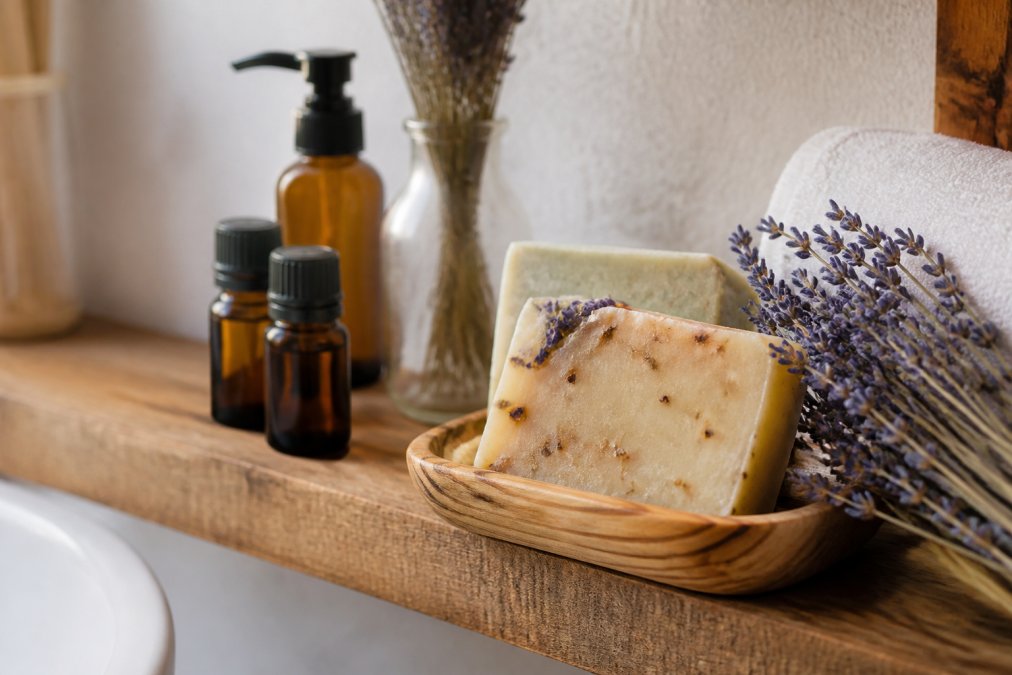
Natural soap bars preserve the glycerin produced during saponification, a natural humectant that draws moisture to the skin's surface. This is one of the key differences between artisan natural soap and commercially stripped alternatives.
The benefits of natural soap for sensitive skin are most pronounced when the soap is scented exclusively with essential oils rather than synthetic fragrance compounds. Synthetic fragrances are among the most common contact allergens and a leading cause of barrier disruption in people with reactive skin. Essential oils, used at appropriate concentrations, provide scent through naturally occurring aromatic compounds without the cocktail of undisclosed synthetic chemicals that "fragrance" on an ingredient label can represent.
Specific essential oils bring additional benefits: Lavender has documented anti-inflammatory and calming properties; Chamomile soothes redness and supports the skin's natural repair process; Tea tree offers antimicrobial support without harshness; Rose geranium helps balance sebum production and is gentle enough for sensitive skin types.
Conscious Path handcrafts its natural soaps in small batches using pure botanical ingredients and essential oils, without synthetic fragrance or harsh preservatives. With sensitive skin bars available. For anyone working to repair a damaged skin barrier, the cleanser is the logical place to start, and a gentle, naturally scented bar soap is one of the most straightforward upgrades available.
How to Build a Gentle Routine: Step-by-Step Barrier Repair
The most common mistake in barrier repair is doing too much. Adding multiple new actives, layering products, and expecting rapid results all work against the skin's repair cycle. A stripped-back, consistent routine is far more effective than an elaborate one.
Patch Testing Natural Ingredients First
Patch testing is non-negotiable before introducing any new product to a compromised barrier. Even natural, plant-based ingredients can trigger reactions in sensitised skin when the barrier's normal filtering capacity is reduced.
Apply a small amount of the product to the inner forearm or behind the ear, leave it for 24 hours without washing, and observe for redness, itching, or swelling. Repeat for 48 hours before applying to the face. This process catches individual sensitivities before they escalate into a full-face reaction. A common mistake is skipping patch testing because a product is marketed as "natural" or "gentle." Natural ingredients are not automatically hypoallergenic.
Applying Products to Damp Skin for Better Absorption
Applying serums, oils, and moisturisers within 60 seconds of cleansing while the skin is still slightly wet dramatically improves the absorption of humectants like aloe vera and niacinamide.
A practical barrier-repair routine:
- Cleanse with a gentle, natural bar soap using lukewarm water only. Pat dry, leaving skin slightly damp.
- Apply humectant (aloe vera gel or niacinamide serum) to damp skin. Allow 30 seconds to absorb.
- Layer emollient (a plant oil such as jojoba or sunflower seed oil) over the humectant.
- Seal with occlusive (shea butter or ceramide-rich balm) as the final step, particularly at night.
Simplicity is the point. Two to four products, applied consistently, outperform a ten-step routine that overwhelms a damaged barrier.
Diet, Environment and Lifestyle Habits That Support Skin Repair
Topical application addresses the barrier from the outside. What happens internally and environmentally determines how fast and completely it recovers.
Dietary fat intake is directly relevant to skin barrier function. The skin relies on essential fatty acids, particularly linoleic acid and omega-3s, to maintain its lipid bilayer. These cannot be synthesised internally and must come from food. Sources like walnuts, flaxseeds, chia seeds, and oily fish support the skin's capacity to rebuild its lipid structure. According to Nutrition Australia's evidence-based dietary guidance, adequate intake of essential fatty acids is associated with healthy skin barrier function and reduced inflammatory skin responses.
Hydration matters, though not in the way most people assume. Drinking water does not directly hydrate the skin's surface, but chronic dehydration impairs every cellular repair process, including the skin repair cycle. Consistent water intake supports overall skin health.
Environmental protection is an overlooked angle. UV radiation degrades the lipid bilayer and disrupts the skin microbiome. Air conditioning and heating reduce ambient humidity, accelerating TEWL. Wearing SPF daily, using a humidifier in dry environments, and covering skin in extreme cold or wind all reduce the environmental load on a recovering barrier.
Sleep is the most underrated barrier-repair tool available. The skin's regeneration cycle peaks during deep sleep, when growth hormone release supports cell turnover and lipid synthesis. Chronic sleep disruption measurably slows barrier recovery. Seven to nine hours of quality sleep is a functional requirement for skin repair.
Stress management follows the same logic. Elevated cortisol impairs barrier function directly by suppressing ceramide production and disrupting the skin's acid mantle. Practices that reduce cortisol have a measurable downstream effect on skin barrier integrity.
Repairing a damaged skin barrier takes patience, simplicity, and the right foundational ingredients. Conscious Path's handcrafted, small-batch skincare range is built around pure botanical ingredients, including plant-based oils, essential oil-scented natural soaps, and non-toxic formulations designed for sensitive and reactive skin. Each product is made by a skilled natural skincare formulator with barrier health in mind. Explore the Conscious Path website to find the right starting point for your skin.
Frequently Asked Questions
How long does it typically take to repair a damaged skin barrier?
Most people notice a reduction in redness and tightness within one to two weeks of switching to a gentle, plant-based routine. Full barrier repair — where skin feels consistently calm, hydrated and resilient — generally takes four to eight weeks. Consistency matters more than speed. Using gentle cleansers, applying emollients and occlusives to damp skin, and avoiding harsh active ingredients gives the barrier the uninterrupted time it needs to rebuild its lipid bilayer and restore moisture retention.
Are essential oils safe for a compromised skin barrier?
Properly diluted essential oils in a well-formulated product are generally tolerated by most skin types, but a compromised barrier is more permeable and reactive. The safest approach is to choose products where essential oils are used at low concentrations for fragrance rather than as active ingredients, and to always patch test before full application. Lavender and chamomile are among the gentler options. Avoid high-phenol oils like clove or cinnamon on irritated skin until barrier function has improved.
Which plant-based ingredients are best for rebuilding the skin barrier?
The most effective plant-based ingredients for barrier repair are those that replenish the skin's natural lipid bilayer. Linoleic-acid-rich oils such as sunflower seed oil and safflower oil top the list, alongside squalane for lightweight occlusion and shea butter for deep emolliency. Plant-derived ceramides support barrier homeostasis, while colloidal oatmeal soothes inflammation and aloe vera boosts hydration. Niacinamide helps regulate skin pH balance and reduces transepidermal water loss, making it a strong supporting ingredient in any barrier-repair routine.
Can natural soap actually help a sensitive, reactive skin barrier?
Yes, provided the soap is formulated without sulphates, synthetic fragrances or harsh preservatives. Natural soaps made with plant oils and scented only with essential oils cleanse without stripping the skin's acid mantle, which is critical for maintaining skin pH balance and a healthy skin microbiome. Cold-process or handcrafted natural soaps retain glycerin — a by-product of saponification — which acts as a humectant and supports moisture retention during cleansing, making them a noticeably gentler option for sensitive or reactive skin.